ExtreAdmin1-

Every week we tweet a lot of interesting stuff highlighting great content that we find on the web that can be of interest to web designers.

The best way to keep track of our tweets is simply to follow us on Twitter, however, in case you missed some here’s a quick and useful compilation of the best tweets that we sent out this past week.

Note that this is only a very small selection of the links that we tweeted about, so don’t miss out.

To keep up to date with all the cool links, simply follow us @DesignerDepot

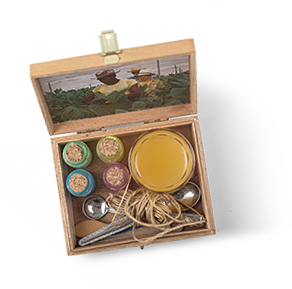
Japan-themed paper cup sleeves by Akira Yoshimura http://depot.ly/MjvrW via @SpoonTamago

13 Dic 2014

In today’s mobile world, fast and reliable connectivity is almost second nature. But even in places like the U.S., where mobile connections are nearly ubiquitous, there are still times when you turn to your phone for that split-second answer and don’t have fast enough speed. Or you can’t get calls and texts because you left your phone in a taxi (or it got lost in a couch cushion for the day). As mobile devices continually improve how you connect to people and information, it’s important that wireless connectivity and communication keep pace and be fast everywhere, easy to use, and accessible to everyone.

That’s why today we’re introducing Project Fi, a program to explore this opportunity by introducing new ideas through a fast and easy wireless experience. Similar to our Nexus hardware program, Project Fi enables us to work in close partnership with leading carriers, hardware makers, and all of you to push the boundaries of what’s possible. By designing across hardware, software and connectivity, we can more fully explore new ways for people to connect and communicate. Two of the top mobile networks in the U.S.—Sprint and T-Mobile—are partnering with us to launch Project Fi and now you can be part of the project too.

Many of us dream of being our own boss, being able to set our own hours and choose what kind of work we take on. But achieving this aim takes years, and even the first step can feel intimidating. Giving up that regular paycheck and setting up on your own is a big step. That is why it is important we prepare beforehand.

Before you consider leaving your existing job take the time to build your business so that on day one you have the basics in place: things like a reputation that will bring in work.

1) BUILD A REPUTATION
In our industry, reputation is everything. If you have a good reputation then people will think of you when they come to hire. It will also increase the chances of you winning work. Whether you are planning to go independent soon or in several years, it is never too early to start building your reputation.

Despite what many say, reputation is not just about producing good work. Relying on word of mouth recommendation alone will leave you wondering where the next piece of work will come from. To build a reputation, you need to put yourself out there. You need to be entering awards, blogging your experiences and networking at conferences.

Most importantly, you need to find yourself a niche. You need to be able to express what you do and who you do it for.

Before you launch your business, people need to already be aware of you. They need to know you as ‘that guy who does amazing iOS interfaces’ or ‘the woman who has done all those great charity websites’. Focusing on a particular area increases the chance that somebody hears of you, if looking at that specific area. If you try and be a jack of all trades you will spread yourself too thin to have much impact.

Not that the quality of your work is unimportant. That is what helps you build a loyal client base.

2) BUILD A CLIENT BASE
One of the hardest parts of setting up your own business is finding those first few clients. This is not something you want to do when you are desperate for money. This will lead you to accept work from bad clients or reduce prices to ensure you win. Instead, the best time to win your first few clients is before you set up the business when you have a regular salary still coming in.

Some people reduce the number of hours they work at their day job so that they can build up a separate client base. You may not have the luxury of being able to do that; so instead you will need to work weekends and evenings for a short while to get those initial few clients under your belt.

These clients are important because they may well lead to repeat business and recommendations. At the least, they will look good in your portfolio and give you something to talk about on your blog (you do have one of those don’t you?)

But taking on a few clients while still paid by the day job has one more benefit: it allows you to earn some extra money.

3) BUILD YOUR RESERVES
It is hard building a client base in the evenings and weekends, while still holding down a full-time job. You may think you are due a reward. You may want to spend some of that hard earned cash to treat yourself. Resist the urge!

No matter how well you prepare to launch your new business, some months will be better than others. The chances are you will not always break even; and that means you will need some cash reserves behind you. Not only will these cash reserves help you pay the bills, they will also stop you getting too desperate and stressed. If you’re worrying about money, it will undermine your productivity. It will also damage the chance of you winning quality work because you will be desperate to close a deal.

You will also need those reserves to help pay some initial setup costs for your business. They will also help cover the inevitable unexpected costs that will crop up in the first few months of work. No matter how well you plan, you will always miss some expense. There will always be some surprise. That is why you need reserves and time to build up experience of running your business before going full time.

4) BUILD YOUR EXPERIENCE
Many people are ill-prepared for striking out on their own, even when they think they understand what is involved. Too often we believe ourselves capable of running a business because we think we will be doing the same work we’ve been doing for years.

But there is so much more to running a business than building websites. Or offering any kind of digital service. There is:
the financial side to the business, from chasing invoices to paying taxes;
the paperwork involved in founding the company;
purchasing the software and equipment to operate daily;
the client and project management issues.

The list could go on…

None of these areas are particularly difficult to master, but they will take time. The problem is that you need to hit the ground running with your new business. To be profitable from day one you will need to be earning revenue within the first month. This means you cannot waste time learning new skills or dealing with the logistics of setting up the business.

That is why it is important to have this already in place by the time you go full-time. As you build your client base in the weekends and evenings make sure you treat this part-time business as if it is the real thing. Set yourself up properly so that when you do finally go full-time everything is already in place.

GIVE YOURSELF A BREAK

Setting up by yourself is a pressurised experience. So give yourself a break and make the transition as easy as possible by preparing beforehand.

Whether you’re building a new website, a new app, or a dashboard, you can’t do without great icons.

The Web is in love with icons, they’re used everywhere from apps to responsive sites, all because they pack information into a small space. And because each set of icons is unique, you can give a different voice to a design, just by switching between sets.

Today we’ve put together the best icon sets so far from 2015. Some have been released in the last 4 months, others have had significant updates.

There’s a ton of different themes here, ranging from business, to leisure, and of course plenty of weather icons. There’s also a wide range of types, with some designers favoring flat design, and others reincarnating skeuomorphic design. Some of these icons have been designed by leading names in the field, others are just regular designers who wanted to give something back to the community.

All of the icons here are crystal clear vectors; some are drawn in Photoshop, some in Illustrator, and some in Sketch. All of them are free to download and use in personal or commercial projects.

Love it or loathe it, it’s impossible to dispute the impact Adobe Photoshop has had on the design world. Over the last 25 years it has edited billions of images, and along the way has made itself the byword for image editing.

Photoshop has its critics, especially within the web design industry, who feel that Photoshop doesn’t offer a flexible enough workflow for responsive design. Other designers swear by it, for sheer processing power. The PSD to HTML industry is certainly on the wane, but the PSD format itself is still going strong; with rival applications failing to find traction, Photoshop is likely to be around for some time to come.

To celebrate a quarter of a century of bitmap brilliance the team at ClickInks.com have put together this timeline of Photoshop’s illustrious history. How many of these versions did you use?

2015 has inherited a lot of trends from previous years, there’s been a steady evolution of ideas — Flat Design into Material Design for example — but nothing as revolutionary as Responsive Design.

However, we are starting to see trends that feel fresh, either through new treatments or because they’re genuinely new ways of approaching old problems. The most widespread of these so far, has been the use of patterns in web design.

Patterns serve a variety of purposes, from communicating a brand value, to adding motion to an interface, to enlivening the simple blocks of color that flat design favors. And the use of patterns, although not scientifically categorizable, falls into one of five broad and inter-related categories…

GENERATIVE PATTERNS

The combination of design and code that makes up the Web has meant that it was always going to be a fertile environment for generative art, and designers working with mathematics. From the earliest days of the Web designers were experimenting with particle systems, but in recent months we’ve seen an increasing emphasis on particles existing within a more formal pattern. These geometric patterns are a natural evolution of the form, thanks to the fact that it relies so heavily on design units and code loops.

What’s really new is that, in 2015 we’re increasingly seeing businesses adopt these kinds of pattern as an integral element of their brand.

Every week users submit a lot of interesting stuff on our sister site Webdesigner News, highlighting great content from around the web that can be of interest to web designers. The best way to keep track of all the great stories and news being posted is simply to check out the Webdesigner News site, however, […]

Every week users submit a lot of interesting stuff on our sister site Webdesigner News, highlighting great content from around the web that can be of interest to web designers.

The best way to keep track of all the great stories and news being posted is simply to check out the Webdesigner News site, however, in case you missed some here’s a quick and useful compilation of the most popular designer news that we curated from the past week.
Note that this is only a very small selection of the links that were posted, so don’t miss out and subscribe to our newsletter and follow the site daily for all the news.

In this month’s edition of what’s new for designers and developers, we’ve included lots of podcasts, design resource directories, lots of web apps, learning resources, productivity resources, new frameworks, APIs, team resources, and much more. And as always, we’ve also included some awesome new free fonts!
Almost everything on the list this month is free, with a few high-value paid apps and tools also included. They’re sure to be useful to designers and developers, from beginners to experts.

If we’ve missed something that you think should have been on the list, let us know in the comments. And if you know of a new app or resource that should be featured next month, tweet it to @cameron_chapman to be considered!

I had originally planned to publish this blog, but I was unsure of how helpful it would actually be. Then I read this article from the LA times. To people like me, that article is absolutely hilarious. However, the gap in understanding of industry terms is something that clearly needs to be addressed to both the general public and our clients. Though we try to avoid over use of these industry terms, sometimes there is no way around it. To help you out, I have put together a list of important words and definitions that will make your life a lot easier during the redesign process. Here is part one of our series on Important Web Design Terms – Basic Web Design Knowledge.

Basic Webpage Elements

  • Content – When we say content, we are generally referring to anything that can live on a page. This includes, but is not limited to, copy, images, graphics, videos, PDFs, Word documents, Excel spread sheets, etc.
  • Header – The top section of the website that contains the main logo and navigation links.
  • Icon – A picture or symbol that appears on a page that is used to represent a specific section, call to action, command, or page of a website. For example, an envelope can be used to represent sending an email. We custom create icons for a lot of our projects so they fit the design perfectly.
  • Footer – The content at the bottom of the page that usually remains universal throughout the entire site. This section usually contains important links, social media, and legal information.
  • Navigation – The links at the top of the website that lead you to the other pages of the website.
  • Parallax Scroll – This is a design technique that allows us to show depth and movement while scrolling. See our design for Specless Media for an example.
  • Section Headers – Not to be confused with THE HEADER, Headers are a block of text on a page that generally signifies a separate section of the site or a call to action. These are usually more prominently displayed that normal copy and are used draw the users attention. We always recommend making these informative and legible.
  • Slider – This is the rotating set of images, messages, and calls to action that generally sit at the top of the page.

This document is intended to serve as a guide to aid in the redesign and development of all new websites, with the end goal of helping your organization create informative and compelling content. This guide will focus on creating copy, producing quality images, developing a successful SEO plan, and learning how to use Gather Content.

We are confident that our recommendations will result in a fully defined and unified brand that will help educate users and promote your organization.

Basic Guidelines for Creating Content

While the following points will guide you in the proper direction, it is important to note a few general principles that are key to making a successful website:

  • Content must be compelling, easily skimable, and to the point.
  • If users do not find what they want, they will leave.
  • While off-page SEO is important, content creation is equally important to SEO. Google now “crawls” your whole site and keeps track of all the relevant content. Sites that have the best content will show up higher in the search results.